-> READ THE ARTICLE IN ENGLISH <-
In zijn stadsgids neemt Parijzenaar Marin Montagut de lezer mee door zijn stad met winkels, restaurants en ambachtslieden die decennialang, soms al eeuwen, actief zijn in de lichtstad. Wat is er te doen in het 19e arrondissement, dat de meeste toeristen links laten liggen?
Eerst iets over Marin Montagut. Deze illustrator, ontwerper, auteur en ondernemer heeft in de rue Madame in Parijs een winkel die oogt alsof ze er al jaren zit. Hij verkoopt er door hemzelf ontworpen serviesgoed, glaswerk, kaarten en andere parafernalia die aan een ver verleden doen denken, met Parijs als vertrekpunt.
Slenteren door de stad
Na twee eerdere boeken over het verborgen Parijs van ambachtslieden en gepassioneerde verzamelaars publiceerde hij Forever Paris, een persoonlijke stadsgids die meer een eerbetoon is dan reisgids. Tijdens zijn wandelingen door de stad ontmoette hij ambachtslieden, kunstenaars en gepassioneerde vakmensen.
Hij brengt 475 adressen in kaart: winkels, cafés, musea, restaurants, parken en vlooienmarkten uit elk arrondissement. Hij illustreerde deze uitgave met lithografieën en prenten uit vervlogen tijden, aangevuld met aquarellen van zijn eigen hand. Laten we samen met Marin door het 19e lopen.
En dan: het 19e arrondissement
Het Parc des Buttes-Chaumont, geopend in 1867, is misschien wel de bekendste bezienswaardigheid van het 19e arrondissement, een buurt die de meeste toeristen links laten liggen. Op een zonnige dag als vandaag trekt het park van alles en nog wat aan: van hardlopers tot lezers met een boek op schoot. Maar het lunchuur nadert en we hebben trek…
Bar Fleuri
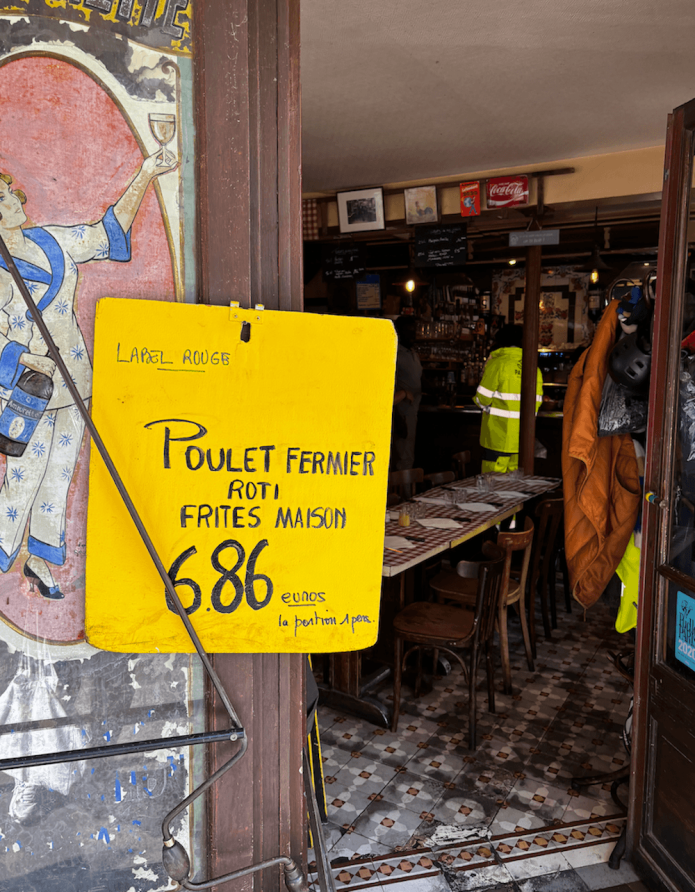
Het wordt Bar Fleuri, een adres dat al langer op ons lijstje staat. Ze staan bekend om hun legendarische ‘poulet fermer roti & frites maison’ voor de prijs van slechts 6,86 euro. We komen er om half 12 aan en hebben nog net een plekje op het terras. Al is dat laatste altijd een mooier woord voor wat het is: een rij tafeltjes langs de pui op straat. Met een rosé en een stralende zon wanen we ons in een Frans dorpje. En geen toerist te bekennen, alleen buurtgenoten.
We beginnen met een flinke plak smakelijke pate, gevolgd door poulet frites en als grande finale een enorme punt tarte citron. Met twee koppen koffie erbij rekenen we iets meer dan 30 euro af.
Russisch-Orthodoxe kerkje
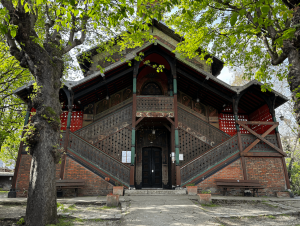
Wat heeft Marin Montagut nog meer voor ons in petto? Een Russisch-Orthodoxe kerk, gebouwd in 1917. Je gaat een hek langs in de rue de Crimée, een straatnaam die herinnert aan de 19e-eeuwse oorlog waarbij Frankrijk en Rusland tegenover elkaar stonden. Als eerste duikt een minihuisje op, geschilderd in de kleuren wit en bordeauxrood en voorzien van een icoon. Het lijkt bijna alsof je je op Russisch grondgebied bevindt.
Even verderop bevindt zich het kerkje, L’Eglise Saint-Serge de Radonège. Spijtig genoeg op die doordeweekse dag alleen geopend voor de vespers rond half zes. We zoeken het interieur op internet op en zien indrukwekkende fresco’s, verguldsel en honderden iconen.
Boottochtje?
Om toch even toerist te spelen denken we er even over om een boottocht over het Canal Saint-Martin of de Seine te maken. Canauxrama biedt deze tochten sinds de jaren 80 aan. Maar we besluiten nog wat rond te lopen.
Het valt ons op dat het 19e arrondissement een ander karakter heeft dan veel andere Parijse wijken: meer laagbouw en helaas ook onooglijke flatgebouwen die vanaf de jaren 70 opkwamen, maar dat is een ander verhaal.
Die laagbouw is geen toeval: de wijk ontsnapte aan de grootschalige sloop die baron Haussmann in de 19e eeuw elders in Parijs doorvoerde met brede boulevards en grote pleinen.
Banketbakker sinds 1834
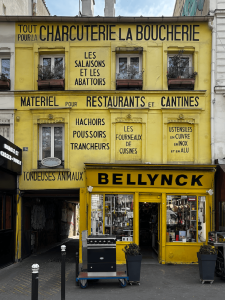
We lopen langs Bellynck & Fils, een winkel met horecabenodigdheden en ook keukenspullen voor de thuiskok. We twijfelen even over een minikoffiemolen, bedoeld om peperkorrels te malen. Toch maar niet – al te veel spullen. En we kijken naar binnen bij Quincaillerie Mirus, sinds 1930. Het is een van die zaakjes die je veel in de stad terugziet: een soort grot van Alibaba, maar dan voor huishoudelijke zaken: van koekenpan tot koffiezetapparaat, van bezem tot ijsmaker. Je vindt het er allemaal.
Voor thuis gaan we nog langs La Vieille France, sinds 1834. Het interieur van deze banketbakker is in de loop der jaren gemoderniseerd, maar de Franse klassiekers hebben stand gehouden. We vertrekken met twee Saint-Honoré: een gebakje van soezendeeg gevuld met slagroom en banketbakkersroom, afgewerkt met kleine soesjes gedoopt in karamel. De naam verwijst naar de patroonheilige van het bakkersvak. Een passende afsluiter voor een dag in het 19e arrondissement.
Marin Montagut, Forever Paris. A guide to the timeless soul of the city, 24,29 euro
© Tekst en beeld: Monsieur Plusfours 2026
MELD JE AAN VOOR ONZE GRATIS NIEUWSBRIEF
Schrijf je in
Exploring Paris’s Nostalgic 19th Arrondissement with Local Marin Montagut
In his city guide, Parisian Marin Montagut takes readers through his city, featuring shops, restaurants, and artisans that have been active in the City of Light for decades, sometimes even centuries. But what’s there to do in the 19th arrondissement, the neighborhood most tourists skip?
First, a word about Marin Montagut. This illustrator, designer, author, and entrepreneur owns a shop on rue Madame in Paris that looks like it’s been there for years. He sells tableware, glassware, cards, and other paraphernalia of his own design, all evoking a bygone era with Paris as the starting point.
Strolling Through the City
After two earlier books about hidden Paris and its artisans and passionate collectors, he published Forever Paris, a personal city guide that’s more of a tribute than a travel guide. During his walks through the city, he met artisans, artists, and passionate craftspeople.
He maps out 475 addresses: shops, cafés, museums, restaurants, parks, and flea markets from every arrondissement. He illustrated this edition with lithographs and prints from times gone by, complemented by watercolors of his own hand. Let’s walk through the 19th with Marin.
And Then: The 19th Arrondissement
Parc des Buttes-Chaumont, opened in 1867, is perhaps the most famous landmark of the 19th arrondissement, a neighborhood most tourists leave aside. On a sunny day like today, the park attracts all sorts of people: from runners to readers with a book on their lap. But lunchtime is approaching and we’re getting hungry…
Bar Fleuri
We head to Bar Fleuri, a spot that’s been on our list for a while. They’re known for their legendary ‘poulet fermier roti & frites maison’ for the price of just €6.86. We arrive at 11:30 and just manage to snag a spot on the terrace. Though that last word is perhaps too generous for what it actually is: a row of small tables along the storefront on the street. With a rosé and the shining sun, we feel like we’re in a French village. Not a tourist in sight, only locals.
We start with a generous slice of delicious pâté, followed by chicken and fries, and as a grand finale, an enormous slice of tarte au citron. With two coffees, we pay just over €30.
Russian Orthodox Church
What else does Marin Montagut have in store for us? A Russian Orthodox church, built in 1917. You pass through a gate on rue de Crimée, a street name that recalls the 19th-century war where France and Russia stood on opposite sides. First, you spot a tiny house, painted in white and burgundy red and featuring an icon. It almost feels like you’re on Russian soil.
A bit further on is the church itself, L’Église Saint-Serge de Radonège. Unfortunately, on that weekday it’s only open for vespers around 5:30 PM. We look up the interior online and see impressive frescoes, gilding, and hundreds of icons.
Boat Tour?
Just to play tourist for a moment, we consider taking a boat tour on the Canal Saint-Martin or the Seine. Canauxrama has been offering these tours since the 1980s. But we decide to keep walking.
We notice that the 19th arrondissement has a different character than many other Parisian neighborhoods: more low-rise buildings and, unfortunately, also some unsightly apartment blocks that emerged from the 1970s onward, but that’s another story.
That low-rise architecture is no coincidence: the neighborhood escaped the large-scale demolition that Baron Haussmann carried out elsewhere in Paris in the 19th century with his wide boulevards and grand squares.
Pastry Shop Since 1834
We walk past Bellynck & Fils, a shop with restaurant supplies and also kitchenware for the home cook. We hesitate over a mini coffee grinder, meant for grinding peppercorns. In the end, we don’t buy it—too many things already. We also peek inside Quincaillerie Mirus, open since 1930. It’s one of those shops you see often in the city: a kind of Alibaba’s cave, but for household items: from frying pans to coffee makers, from brooms to ice cream makers. You’ll find it all there.
Before heading home, we stop by La Vieille France, established in 1834. The interior of this pastry shop has been modernized over the years, but the French classics have stood the test of time. We leave with two Saint-Honoré pastries: a dessert of choux pastry filled with whipped cream and pastry cream, finished with small choux pieces dipped in caramel. The name refers to the patron saint of the baker’s trade. A fitting end to a day in the 19th arrondissement.
Marin Montagut, Forever Paris. A guide to the timeless soul of the city, 24,29 euro
© Text and photo’s: Monsieur Plusfours 2026
JOIN OUR FREE NEWSLETTER

Subscribe
