-> READ THE ARTICLE IN ENGLISH <-
Opeens zijn ze terug: antieke wandtapijten duiken op in interieurs én modecampagnes.
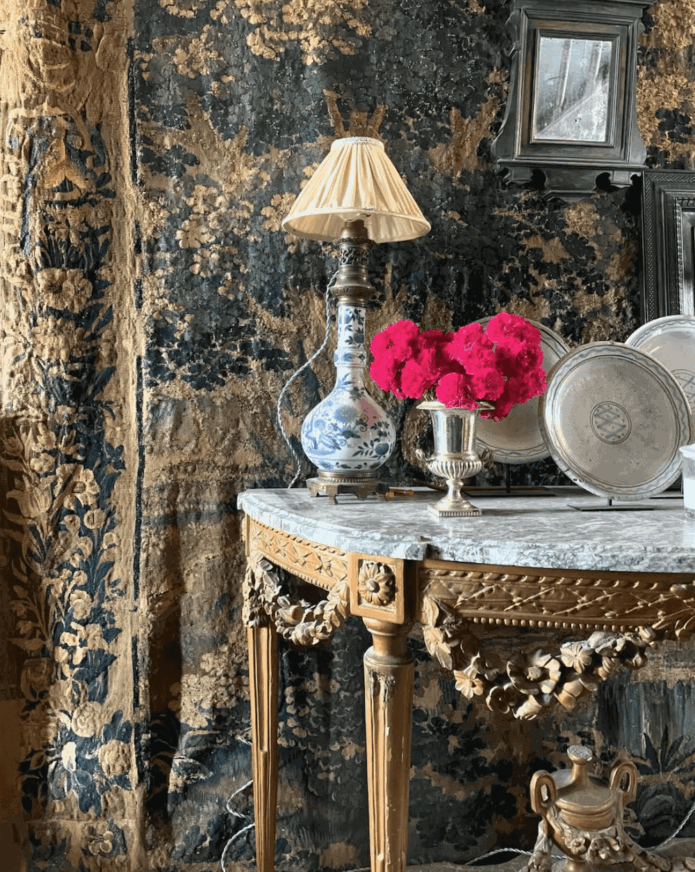
Wie erop let, ziet ze overal verschijnen. In interieurcampagnes, maar net zo goed in mode-advertenties. Gobelins. Grote, geweven wandtapijten uit de 17e, 18e en 19e eeuw. Klassiek? Zeker. Gedateerd? Absoluut niet.
Wandtapijt, gobelin of aubusson?
De termen wandtapijt, gobelin en aubusson gebruiken mensen vaak door elkaar. Wandtapijt is de verzamelnaam. Gobelin verwijst oorspronkelijk naar de ververij en wandtapijtfabriek van de familie Gobelin bij Parijs, terwijl aubusson verwijst naar kleden uit de streek rond het Franse Aubusson
Châteaucore
Gobelins passen opvallend goed bij châteaucore, een trend die al een paar jaar meegaat en zich laat inspireren door de romantiek van Franse kastelen. Met verweerde materialen en meubels die generaties lang zijn verzameld. De wandtapijten horen daarbij: met landschappen, jachtscènes, religieuze voorstellingen of mythologische figuren.
Zo makkelijk vind je ze niet
De Belgische interieurontwerper en antiquair David de Decker-Thissen ziet de vraag al een paar jaar toenemen. ‘Maar mooie antieke gobelins voor een goede prijs zijn lastig te vinden.’ Grote wandtapijten zijn schaars; fragmenten duiken vaker op. ‘Die verwerk ik bijvoorbeeld tot kussens.’
Meer dan decoratie
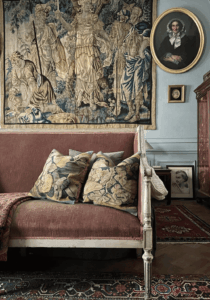
Oorspronkelijk hadden gobelins een praktische functie. Ze bedekten muren om kou en tocht tegen te houden. Die rol is nu minder belangrijk, maar hun impact blijft. ‘Het is echt een blikvanger, in een klassiek en een modern interieur,’ zegt David. ‘Vroeger waren gobelins een statussymbool, en eigenlijk zijn ze dat nog steeds.’
Fotobehang Livingwalls Walls by Patel
Als antiek geen optie is
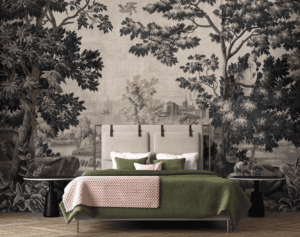
Ook zonder antiek exemplaar kun je de gobelin-look krijgen. In de jaren zestig was er een revival met machinaal gemaakte wandkleden (check Vinted). En nu is er fotobehang in gobelin-stijl – hetzelfde effect, maar dan op maat en betaalbaar. Een echt wandkleed? Die staat voorlopig nog op het verlanglijstje.
© Tekst: Monsieur Plusfours 2026; beeld: foto’s David de Decker-Thissen en Patel / A.S. Création
MELD JE AAN VOOR ONZE GRATIS NIEUWSBRIEF

Schrijf je in
David de Decker-Thissen’s Brussels home with a gobelin
Why gobelins are suddenly everywhere again
All of a sudden, they’re back: gobelins are popping up in interiors and fashion campaigns alike.
Once you notice them, they seem to be everywhere. In interior ads, but just as easily in fashion imagery. Gobelins. Large, woven wall tapestries from the 17th, 18th and 19th centuries. Classic? Absolutely. Outdated? Not at all.
Tapestry, gobelin or aubusson?
People often use the terms tapestry, gobelin and aubusson interchangeably. Tapestry is the general term. Gobelin originally refers to the dye works and later the tapestry workshop of the Gobelin family near Paris, while aubusson refers to tapestries from the region around the French town of Aubusson.
Châteaucore
Gobelins fit surprisingly well with châteaucore, a trend that’s been around for a few years now and draws inspiration from the romance of French castles. Not sleek or perfect, but lived-in. Think weathered materials and furniture collected over generations. Gobelins belong right there, with their landscapes, hunting scenes, religious imagery or mythological figures.
Not that easy to find
Belgian interior designer and antique dealer David de Decker-Thissen has seen demand grow steadily over the past few years. ‘But beautiful antique gobelins at a good price are hard to find,’ he says. Large wall tapestries are rare; fragments show up more often. ‘I use those, for example, to make cushions.’
More than decoration
Originally, gobelins had a practical purpose. They covered walls to keep out cold and drafts. That function matters less today, but their impact remains. ‘They’re real eye-catchers, in both classic and modern interiors,’ says David. ‘They used to be a status symbol, and in a way, they still are.’
If antique isn’t an option
Even without an antique piece, you can still achieve the gobelin look. In the 1960s there was a revival with machine-made wall hangings (check Vinted). And now there’s gobelin-style wallpaper — the same effect, but made to measure and more affordable. A real wall hanging? For now, it’s still on the wish list.
© Tekst: Monsieur Plusfours 2026; photo’s: David de Decker-Thissen and Patel / A.S. Création
JOIN OUR FREE NEWSLETTER

Subscribe
